

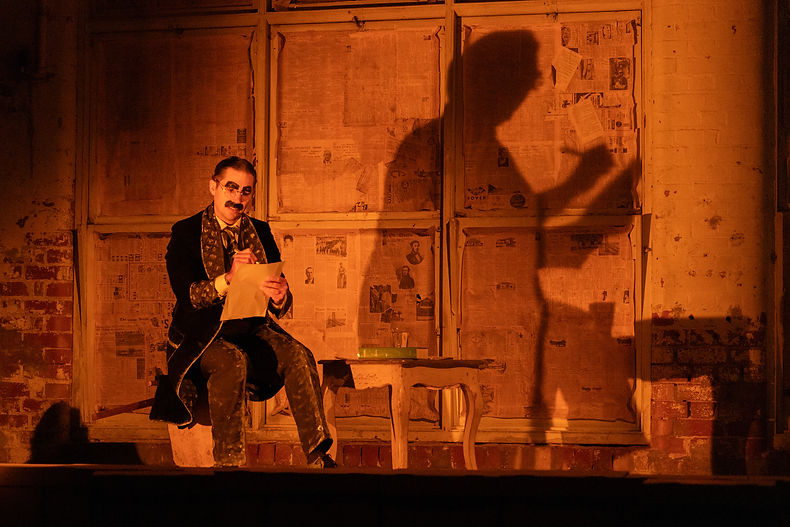
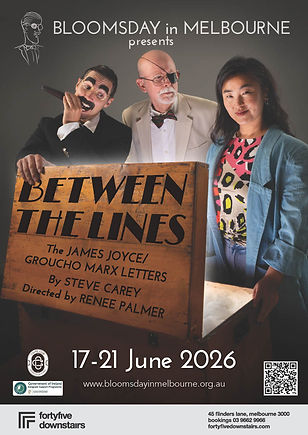
2026 Between The Lines: The James Joyce/Groucho Marx Letters
When a young female scholar makes the find of a lifetime, her journey is just beginning...
What did the critics say?

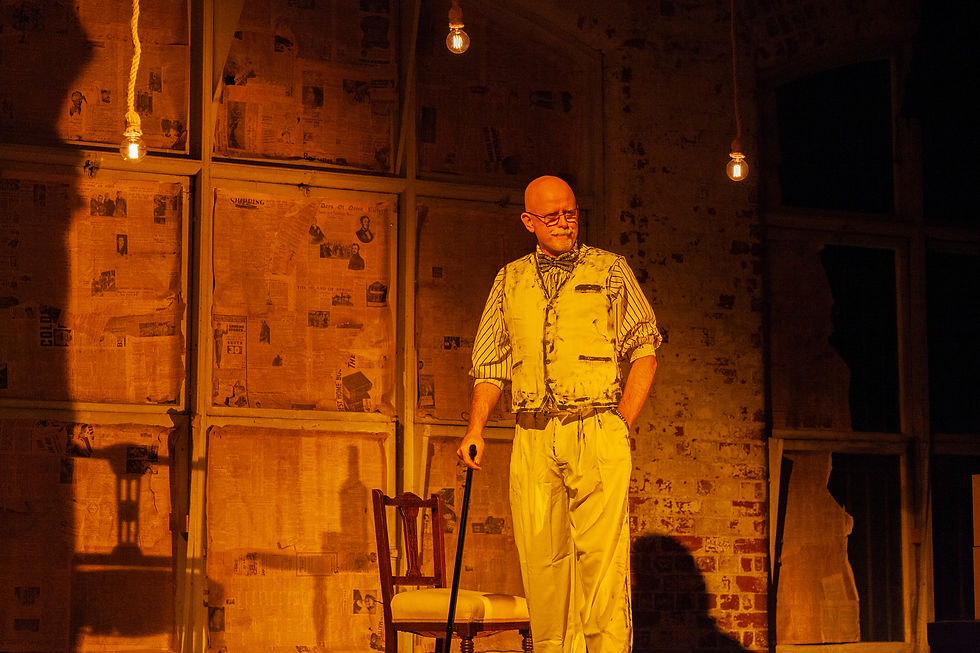

"An imaginative and believable story line together with some great acting ensures Bloomsday in Melbourne’s latest production Between The Lines – The James Joyce/Groucho Marx Letters offers an entertaining night at the theatre."
Jenny Burns, Travels With JB
THE 2026 BLOOMSDAY ANNUAL SEMINAR:
“Blessed Art Thou Among Women”: James Joyce's “Me Too” Moment and the Helen Garner 'First Stone' Affair
Bloomsday in Melbourne's play for 2026 considered how women are viewed by Joyce and Marx (Groucho, not Karl) in 1937; and set our young female academic down in 1980s England, contending with the literary, and particularly the Joycean, academic establishment.
Helen Garner's controversial book The First Stone has raised feminist hackles since its publication in 1995. The issues it deals with have if anything become more urgent and more contentious in the 30 years since. Indeed, in 2024 the Joyce industry experienced its own seismic “Me Too” moment.
Where are we now? What needs to happen next?
Chair: Steve Carey
Panel: Professor Ronan McDonald, Gerry Higgins Chair in Irish Studies, Melbourne University; Frances Devlin-Glass, Artistic Director, Bloomsday in Melbourne; Stacey Roberts, University of Melbourne
Steve Carey (Chair), Opening Remarks
This year's play is set in 1937, when the letters are supposedly written, and the 1980s, when they are discovered and set off the play's action. It is observed from another era altogether. Today's panel considers ways in which Joyce has been read and interpreted by readers of all kinds - feminists of the first, second, third wave and beyond; and readers coming to Ulysses for the very first time a hundred years after its publication.
To read Steve's opening remarks, go here.
Frances Devlin-Glass, The Reception of Ulysses by Feminists
Feminist readings of Joyce in general and Ulysses in particular have broadened and deepened our appreciation of his work. In parallel, the "Joyce Industry" has evolved to recognise that patriarchy and entrenched sexism have often constrained our ability to see Joyce's work clearly.
To read Frances's "Feminist Literary History and Joyce: in Four Snapshots," go here.